Category: Historical Fiction

  • Meet Kaya

    Meet Kaya

    Magpie!

    Author: Janet Shaw

    In my ongoing quest to reread the American Girl series, we have reached Kaya. Maybe it’s just the horse, but I get a Felicity vibe from Kaya. I have this idea that if Felicity and Kaya met, they would be instant friends, talking horses and making friendships bracelets… or trigger happy Ben would shoot poor Kaya…

    Anyway, American Girl gave Janet Shaw the opportunity to redeem himself from the cringy depiction of native americans in Kirsten’s series by letting her write Kaya’s. How did that go?

    Kaya’s Personality

    Kaya is very impulsive. Kaya clearly craves attention, and will grasp at anything to feel accomplished. She loves her horse, but she is desperate to prove themselves as a horsewoman, a runner, and a swimmer. I want to give poor Kaya a hug and tell her she is valuable just as she is and she doesn’t have to prove anything to anyone.

    Kaya’s Family

    I am trying to remind myself that this story takes place in a culture and setting that is very different from my own… but I still don’t like Kaya’s parents.

    Kaya’s grandmother chastises her “You’re not a little girl any longer. You are growing up.” She’s nine. I know the modern western world often coddles our children too much, but I wouldn’t ask a nine year old to babysit two four-year-olds. It’s just too big an ask in my opinion.

    Kaya is the stereotypical forgotten middle child. She fluctuates between responsible and impulsive. She wants to be a daddy’s girl, the opposite of her big sister Brown Deer, but she’s not a carefree wild child like her little brothers. The text wants me to think Kaya’s main problem is pride, but I think Kaya’s main problem is that she wants attention and she’s not getting it.

    It seems to me that Kaya is a normal nine year old girl, she doesn’t deserve to be switched or called names just for being a nine year old. I understand the point Whipwoman makes about how with thier way of life the stakes for screw up can be life or death, I just think that, developmentally, it’s too much to expect of a nine year old.

    Symbolism of Speaking Rain

    I see Speaking Rain as more of the Yin to Kaya’s Yang. She is the part of Kaya that focuses on caring for others, family and loyalty, while hot headed Kaya focuses on defining herself and being seen, Speaking Rain is the part of Kaya that Kaya can’t see… hence the symbolism of her being blind… Or maybe I’ve studied too much Greek Mythology.

  • Meet Josefina

    Meet Josefina

    What an adventure

    Author: Valerie Tripp

    Josefina’s personally

    Josefina is the youngest of four sisters, yet we see she is the peacemaker between her sisters.

    According to birth order personality theory, it is rare for the youngest to be the peacemaker. So it’s interesting that Josafina has taken this role on, apparently since the death of her mother.

    Josefina seams to struggle with anxiety about the goats. I’ve never had goats myself, but I’ve heard they can be bullies.

    Symbolism

    There are some great symbols in this book. The primrose has a number of meanings, I think the most relevant are childhood innocents, healing, and material love. That almost summarizes the whole book!

    Josafina is afraid of goats… but is she really? I’m no mental health professional,  but I do know that anxiety and hypervigilance are common reactions to trama. I think that Josafina is projecting her fears about the world onto the goats. The world is everywhere, an unmeasurable danger, but Josefina can know where the goats are, and while she can’t avoid the world, she can avoid some goats.

    We have reached the end of the American Girls I knew as a kid. Next we read the first girl released after I aged out of the series: Kit

  • Meet Addy

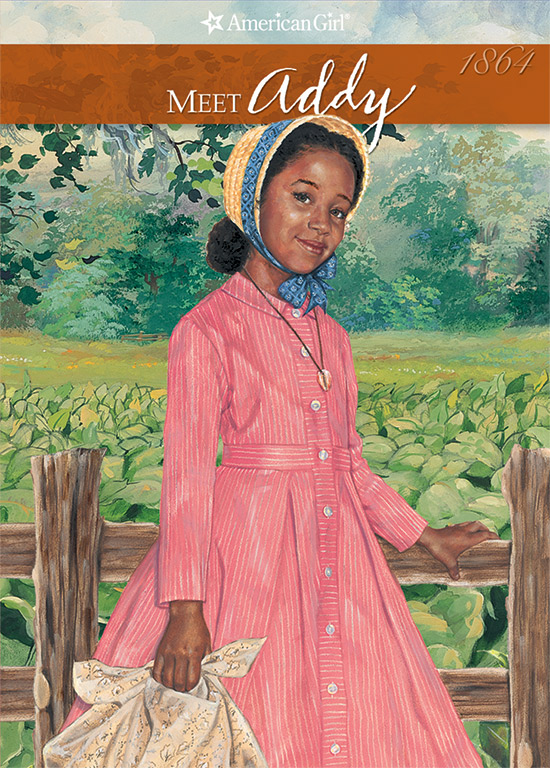
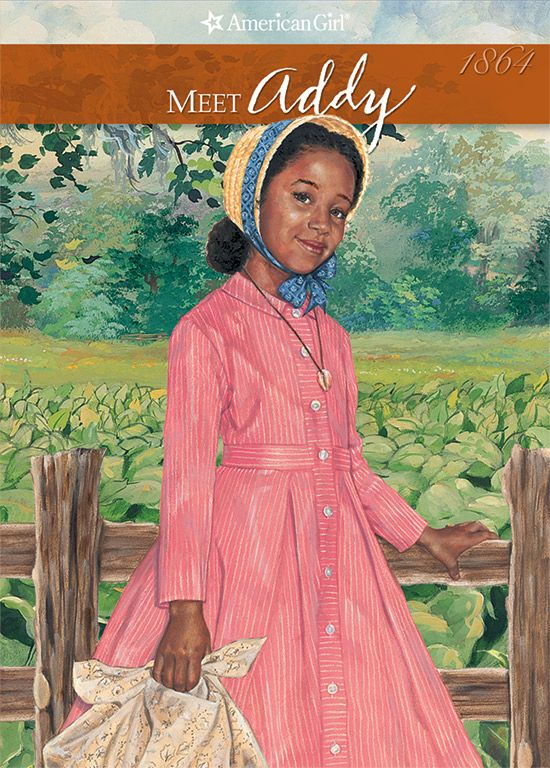
    Meet Addy

    Freedom’s got its cost

    Author: Connie Porter

    In my on going mission to reread all the American Girl “Meet” books, we have finally reached Addy.

    The Addy Controversy

    Addy was Pleasent Company’s first non-white character and I know some people object to Addy’s story being set in the civil war. Some argue that Pleasent Company couldn’t think of any other story to tell with a black girl. According to the American Girl Wiki, it was an intentional choice by the advisory committee to tackle the most painful part of American history head on. I don’t know if that is true, what I do know is Connie Porter wrote an amazing story!

    I still have a lot of American Girls to “Meet” and we are rapidly approaching the end of characters I remember from my childhood, but I remember being moved by Addy’s story in a way that the other girls just didn’t emotionally impact me.

    Addy’s Personally

    All the American Girls are introduced doing something timeless in a setting that grounds us in there time period. Kirsten is playing dolls, on the deck of the ship taking her to America. Felicity is running an errand for her mother. Addy is listening to her parents talking at night.

    We are told that Addy feels safe surrounded by her family, and this sence of safety gets ripped away.

    Addy is highly intelligent, and that leads to her ability to adapt to her surroundings.

    Throughout the book, Addy develops an internal locus of control, or as Papa puts it “freedom in your head.” This allows Addy to adapt a new sence of safety as the story progresses.

    Symbols in Addy’s story

    There are a lot of references to bugs in Addy’s story. Addy hears crickets at the beginning of the story. She is famously force-fed worms by the overseer on the plantation. Addy even pulls a leech off of her skin after crossing a river.

    In the last chapter, once Addy and Mama are safe, the references to bugs stop. I think the bugs are there as a visceral representation of slavery itself. It’s an age appropriate means of touching on the cruelty and violence inflicted on people in slavery. The series isn’t going to show Addy having the overseer’s “worm” forced down her throat, but it can and does show him forceing real worms down her throat.

    Addy Doll

    I have avoided talking about the dolls or tie-in merchandise because I want to focus on the stories, but I want to point it out with Addy because of how well written it is.

    All the American Girl dolls had a “Meet Accessories” bundle you could buy that included a hat, a bag, handkerchief, a piece of jewelry, and money from the time period. (Kirsten didn’t need money on the prairie so she got a spoon)

    Everything in Addy’s meet collection is used in this story. If you aren’t paying attention to the ONE refrance in the book to Felicity’s amber necklace you can be forgiven for not noticing it on the doll… or knowing it’s actually a coral necklace. But Addy’s shell necklace is a family heirloom that gives her courage, her coin is a symbol of the price she must pay for freedom. The handkerchief and water jug are the survival tools she and Mama use in their escape. I don’t think Kirsten’s spoon even gets a mention in the text!

    Addy is a according to the Straus-Howe Generational Theory, Addy is a member of the Progressive Generation (along with Kirsten’s baby sister and Samantha’s Grandmother.) This generation was defined by rebuilding America in the wake of the Civil War, and they adapted to the needs around them. We definitely see this adaptability with Addy.

    Future Theory

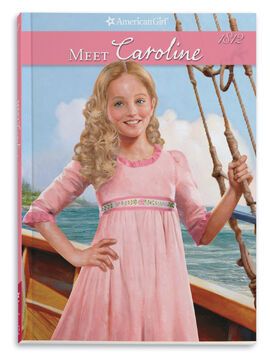
    I aways liked the idea that the American Girls all co-exist in the same universe. Like if Addy’s family had gone to Minnesota instead of Pennsylvania they might have met the Larsons. The woman who helped Mama and Addy get to Philadelphia is named Caroline, and assuming she’s about 60… let’s just remember Miss Caroline when we get to Meet Caroline.

    But that won’t be for a while, next up I am reading Meet Josefina.

  • Meet Molly

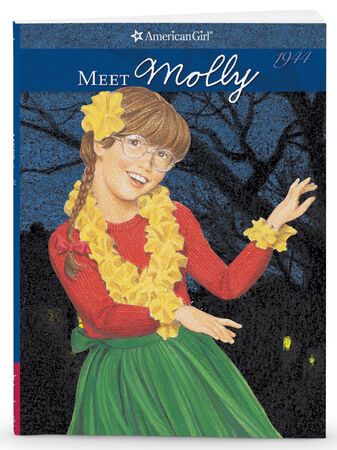
    Meet Molly

    “The war has changed some things” said Mrs. McIntire. “But some things are still the same”

    Author: Valerie Tripp

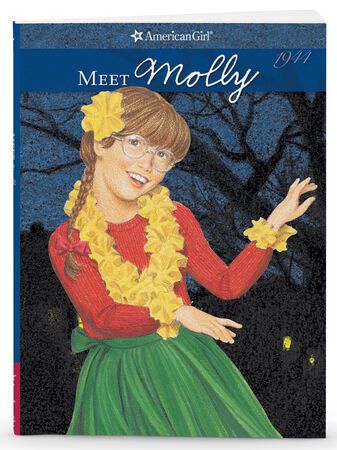
    Molly is my least favorite of the original three American Girls. She’s described as spirited, but I think she’s a little bratty.

    All the American Girls are introduced doing something that is a timeless childhood experience while grounding the reader in her time period. Samantha was being unladylike climbing a tree, Kirsten was playing dolls on the deck of a ship, Molly is refusing to eat her vegetables from the family victory garden.

    I looked for some kind if symbolism in Turnips and couldn’t find anything that seamed to fit with Molly’s story, although I did run into gardening blogs that said that a hot, dry summer will make turnips bitter. Molly does tell us that it was a hot dry summer and most of the victory garden failed, so I think the turnips were just bitter, no hidden symbolism.

    Molly cares a great deal about patriotism… not necessarily being patriotic, but in being viewed as patriotic. I can’t tell if that is realistic for a child hearing all the WWII propaganda, or if it’s just Valerie Tripp being a war jaded baby boomer projecting on the past.

    Molly wants to be Cinderella for Halloween, so in her mind that

    means her friends have to be the ugly stepsisters… Molly grows up to be Delphine doesn’t she?

    Why can’t they all just be fairytale princesses? Be Cinderella, Snow White, and Sleeping Beauty. Why do you have to put your friends down like that Molly?

    The girls seam to think that Mrs. McIntire was too easy on Ricky, but I think the McIntire parents believe in letting the punishment fit the crime, and I for one am a fan of this calm, logical, firm punishment style. Ricky destroyed the girl’s Halloween candy, so he losses his candy. His prank leaves a mess in the driveway, he has to spend his Saturday cleaning it up. The girls throw Ricky’s cloths out the window in revenge, so they spend their Saturday doing Ricky’s laundry.

    Speaking of Saturday: based on the timeline, it is clear that Halloween fell on a Friday, with the final chapter taking place on Saturday November 1st. Except that is not possible. Halloween 1944 was a Tuesday not a Friday… Halloween was a Friday in 1986 though, so it was right to the kids reading this book.

    Sidenote: what kind of neighborhood is this where Mrs McIntire felt comfortable punishing other people’s kids? She just included Linda and Susan in the laundry punishment. Don’t get me wrong, they were involved and I think it was fitting punishment for what they did, but having worked at a school… how do you just do that?! You don’t have to even call their parents?! Oh the good old days I guess.

    Next up: Meet Felicity

  • Spoiler-Free Review: The Lost Apothecary

    Spoiler-Free Review: The Lost Apothecary

    It’s okay to change… but it’s not okay to hide, to bury parts of ourselves

    Author: Sarah Penner

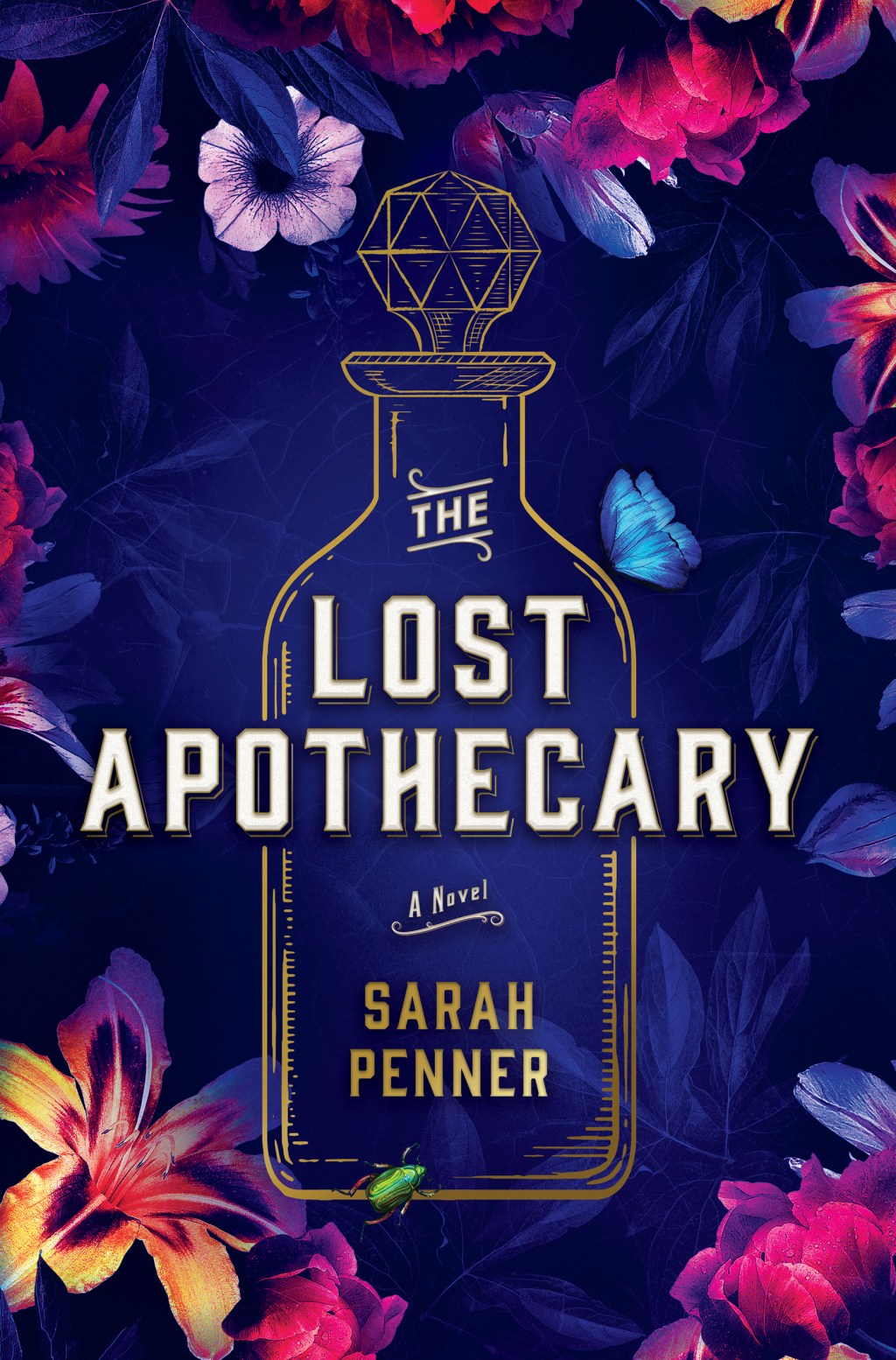
    In 6th-century London, a mild-mannered apothecary- Nella- gives out herbs and ointments to tend to the pains of local women… And if occasionally those pains come from a cheating husband, an unscrupulous employer, or a lusty landlord, well, there are herbs to deal with that too. Nella has two rules about her herbs: She will not poison a woman, and she must record everything in her book.

    In modern-day London, Caroline is exploring the city, trying to forget her philandering husband and reconnect with her unused history degree. While exploring the riverbed, she finds an apothecary bottle, without a name etched on it. What kind of apothecary wouldn’t want people to know who made the treatment that helped someone? What is the story of this strange little bottle? Caroline becomes determined to tell the story of this strange little bottle, and the apothecary lost to time.

    I want to like this book. I really do. Caroline’s husband is a great depiction of a controlling narcissist, but I’m glad the book doesn’t use that word because ultimately his diagnosis doesn’t matter, his behavior is unacceptable.

    My big problem with books like this is that they tend to fall into the feminist territory of “women good, men bad” I understand why Nella doesn’t want her poisons used on women, but Nella is still providing means to kill people. I get that for her, it’s an ethical standard, but it really isn’t. Murder is not any more ethical just because of the victim’s reproductive organs. I just wish the book called that out more.

    I also have an issue with the idea of Nella wanting to leave a record. I get it is so that Caroline can find her log book, but most non-nobles didn’t think about how they would be remembered. Willaim Shakespeare didn’t record an autobiography. I know that’s the theme of the book, but it’s a very 20th-century idea, and it bothered me.

    If you believe the ladies in “Cell Block Tango” from Chicago that “they had it coming”, you will like this book.