
Author: Susan S Adler
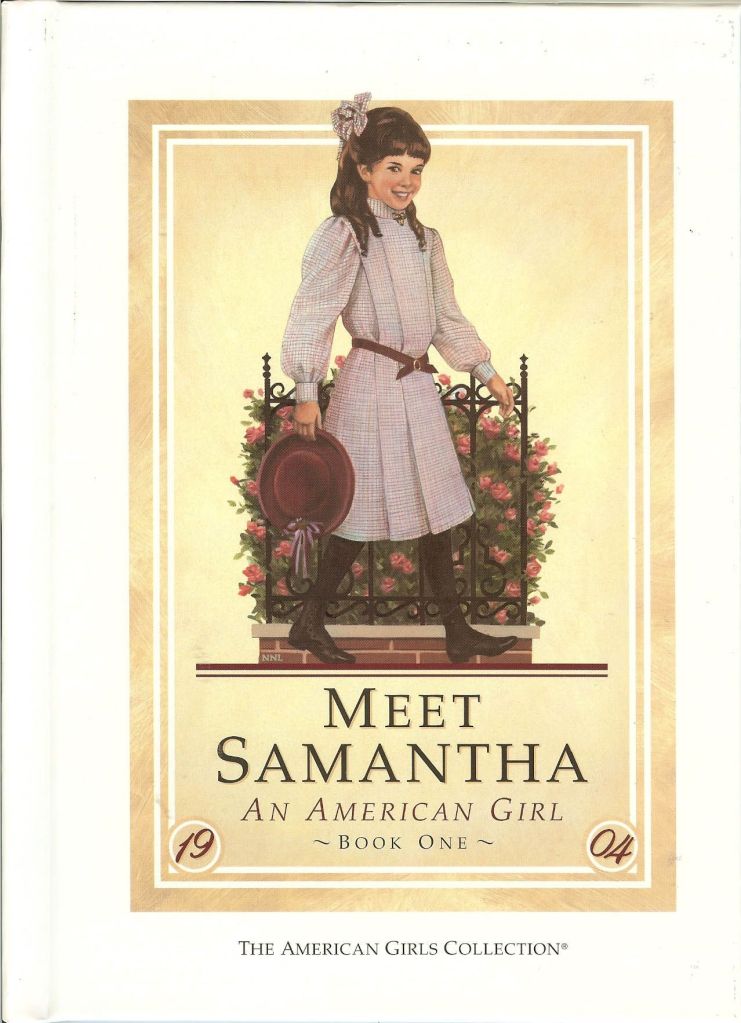
Have you meet Samantha? The one and only, Samantha Parkington. I am on a quest to read all 14 of the American Girl meet books in order of release.
First up is Meet Samantha
Why Samantha?
Why is Samantha the most popular of the original American Girls? I ask this question as a proud Samantha myself: why do we like her? Wish fufilment? After all when we imagine ourselves in the past, no one day-dreams about being poor. Is it just because she’s old-timey and has lots of money? Or is it more than that?
There is a theory called the Straus-Howe generational theory. It’s not without criticism, but it’s really interesting in light of the American Girl franchise because the core of the theory is that western culture cycles through four generational archetypes. Since a big part of the American Girl series is about comparing what changes over time verses what stays the same, I think it’s interesting to look at the American Girl franchise through this lense.
The four generational archetypes are:
- Prophet (or Idealist) challenging institutions and bringing social change
- Nomads. The children who get ignored because of all the social change going on.
- Hero. Use collaboration to face some sort of crisis.
- Artist. Children during the Hero’s crisis. They focus on self sacrifice and strengthening institutions… which will be challenged by the next generation of Prophets.
Samantha is a member of the Lost Generation, which according to the Straus-Howe Theory is a Nomad generation. Here is where things get interesting: Meet Samantha was published in 1986. A nine year old girl in 1986 would be a member of Gen X, the famous “Latch Key Generation.” Can you guess what archetype Gen X is? Yes, it’s Nomad. The 1st Nomad generation since the Lost Generation. Could it be that the reason Samantha is so popular is because she reflects the first group of readers?
Samantha’s personality
All the American Girls are introduced doing something timeless to childhood in a historical context. Their childish actions also give us a clue to their central conflict. Samantha is introduced climbing a tree.
If you know anything about victorian culture… or if you read the May/June 2001 issue of American girl magazine you know that victorians loved attributing meaning to plants and flowers.
So what kind of tree is Samantha climbing and what does it mean? She’s climbing a oak tree. Oak trees represent hospitality, so right on the first page we are told that Samantha cares about people.
Caring about people is very lady like, but climbing a tree is not. Samantha is lady like in the ways that ultimately matter, but she also has the courage to break with the rules when they don’t suite her.
Samantha’s family
Samantha is an orphan living with her grandmother and longing for a mother figure. Samantha’s grandmother, Grandmary, cares for her, but she is not filling that mother role.
Cornelia is in a better position to fill that maternal role, but she’s barely a character in this book.
Mr and Mrs Hawkins are caring figures in her life, we see that they are actually the ones Samantha can at least get SOME care and guidance from. But the real person Samantha turns to in this house is the seamstress Jessie. And it’s easy to see why, she’s about the right age to be a material figure and she strikes that balance of chastising and care when Sam gets into mischief.
In Samantha’s interaction with Jessie, there is a moment where Samantha is watching a group of ants swarm on a cookie. I looked for victorian symbolism about ants, all I could find was Biblical imagry of ants as hard working, which does fits with the books theme about how our actions matter.
What is the reason that Samantha befriends Nellie? Is she just nice? Bored during the summer? Or is Samantha a people pleaser?
Given that Samantha suffered a loss at a young age, and how much she cares about pleasing her grandmother and uncle, I wonder if she has a need to people please. I think many of us real world Samantha’s are guilty of people pleasing.
Sam and Nellie play in a hedge of lilacs, and we are back to victorian flower language! Lilacs have multiple meanings. “Youthful innocents” is the most likely to my mind given the girls play with dolls and whatnot, but it can also mean “first love” so the sameone would have a field day with that.
What jumped out at me during this re-read, is how both Samantha and Nellie, don’t know where babies come from. These girls don’t even know enough about their bodies to know what pregnancy is! Even Nellie who has two little sisters?!
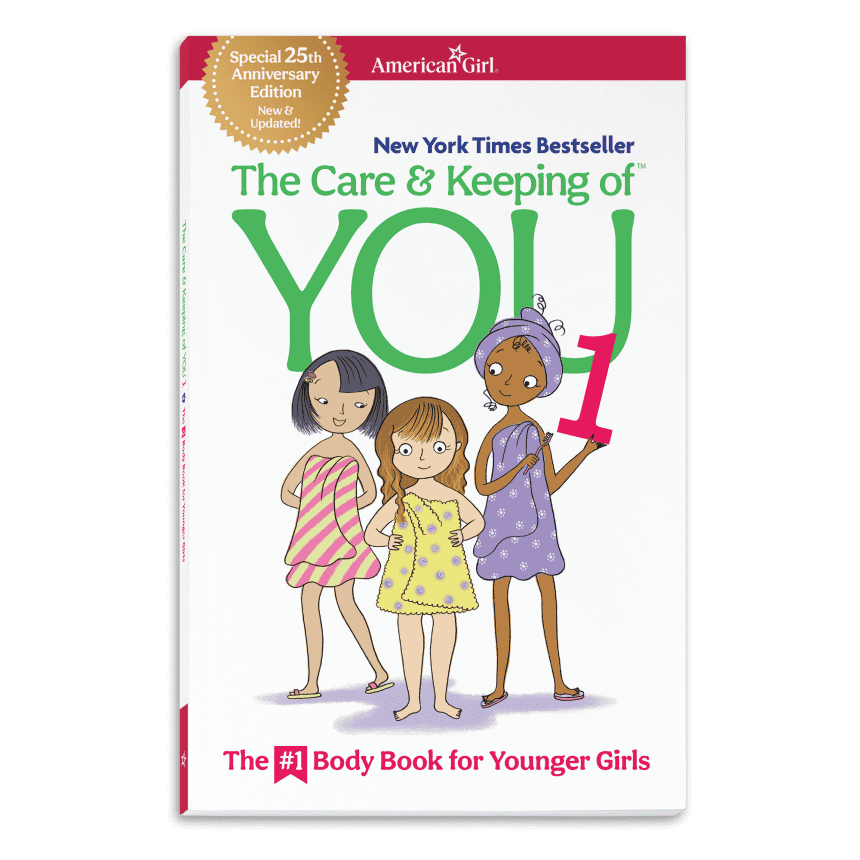
I’m not expecting them to have an indepth understanding of each trimester, but they don’t even understand that pregnancy is a thing?! Someone get these girls a copy of The Care and Keeping of You.











 oddlibrarianout.com
You must be logged in to post a comment.