Tag: Historical Fiction

  • Meet Julie

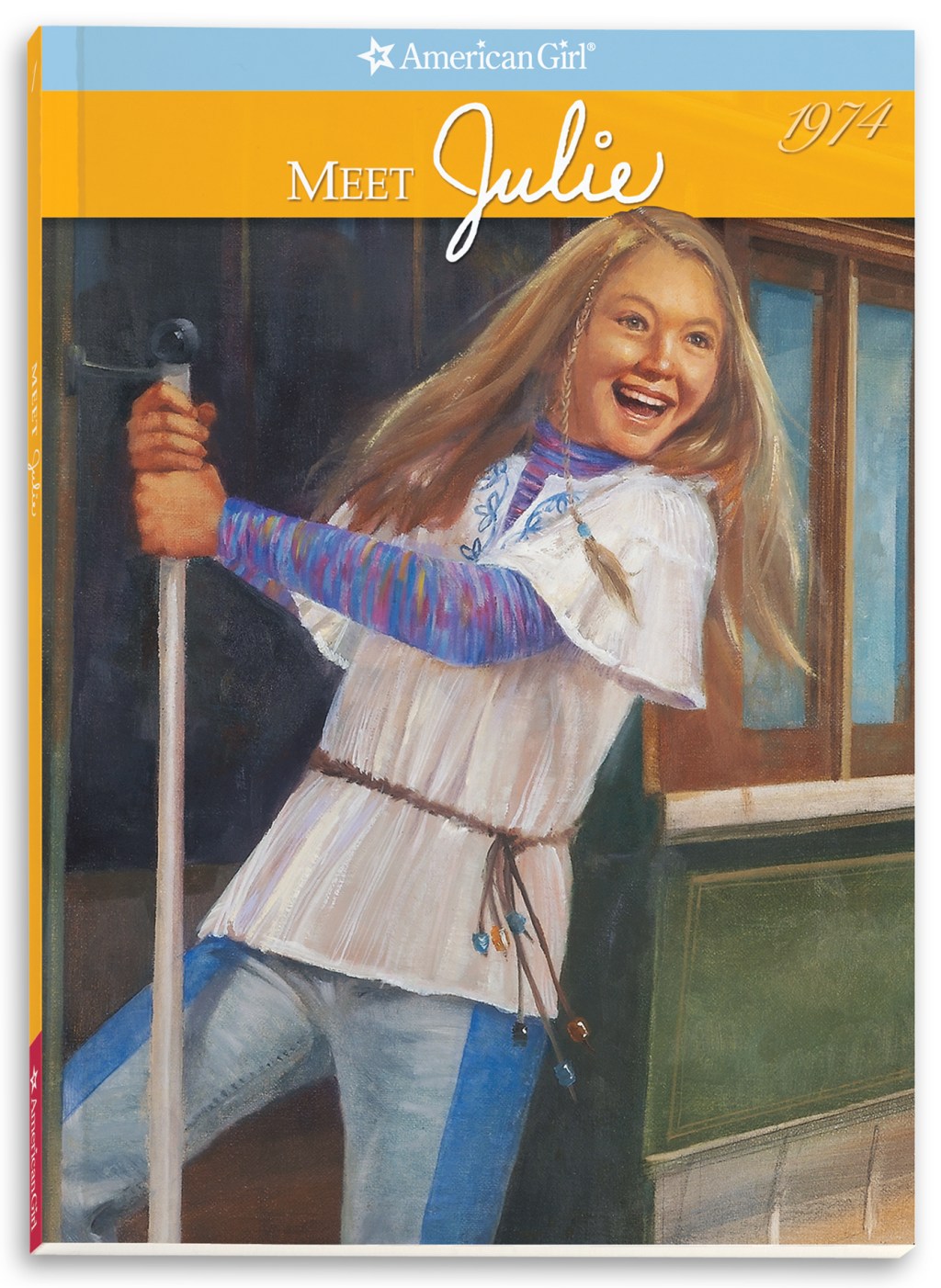
    Meet Julie

    No turning back now

    Author: Megan McDonald

    It’s the 1970s. Bust out your mood rings and pet rocks!

    The American Girl series is starting to feel more decades day at school and less about American history. Yes, it is important to remember that recent history is still history for kids, but it’s not like Julie’s mood ring is something kids would never see today. Heck, kids today still see fights about who gets to play on the gendered sports teams… it just looks different in 2025.

    Julie’s personality

    We are introduced to Julie as she is doing cartwheels. She is spinning, her life is turing upside-down. Like the other American Girl introductions this is Julie’s theme: Jukie is tumbling through the world looking for the right way up. Julie is struggling for identity. She doesn’t even know her favorite color!

    Julie’s parent’s just got divorced, she’s moving and starting a new school, it’s the 1970s! Any of those alone can shake up your self-image, and Julie has to deal with all of it. She is very unsure of who she is and where she belongs in the world. Julie is also a Gen Xer, so not feeling like she belongs is to be expected.

    Julie’s Family

    Julie’s Mom is introduced to us taking down a hanging geranium plant. Geraniums symbolize folly. Is this telling us that the marriage was folly, or that Mom is a foolish person?

    I like the representation of Julie’s parents. Something that bothers me in children’s media is when divorced parents are so united that you have to wonder why it didn’t work out… It’s very clear why Julie’s parents are divorced. Her dad is a straight laced kind of guy, her mom is a hippie. I get why it didn’t work out.

    Basketball

    So I did the math, Julie would have been born in 1965, and according to the generally accepted generation breakdowns, that is the very first birth year of Gen X. Like most Gen Xers, Julie is a latch-key kid. Julie takes up basketball as a way of avoiding the empty house. Julie’s fight to get on the basketball team feels very Gen X, she refuses to blindly trust authority figures, and she questions everything.

    I think the school should have started a girl’s basketball team. Julie being the ONLY girl on the team is going to cause her social problems. She can’t bond with her teammates in the locker room, and she will be ostracised by the other girls. The other girls will be jealous that Julie found a way to stand out, and being yourself and standing out is not how you make friends as a pubescent girl. Yeah, girls are like that.

    Best Friends

    Speaking of girls why did Ivy apologize? She just didn’t want to spend her whole Saturday getting signatures for Julie’s petition. Julie never asked Ivy to help her, she just blindly assumed Ivy would. Poor Ivy was dragged around the streets of San Francisco, and her best friend Julie was completely clueless about Ivy’s obvious discomfort… I seriously want to know why Ivy owes Julie an apology.

    All in all Julie is a fun character, but you can start to see the cracks in the original American Girl concept starting to form: it’s not like Julie is wearing a shift and stays, she wears blue jeans and tanktops, the cut and colors might be different, but kids still see those cloths today. Julie’s world just isn’t so different from the world today that tactile play (dolls) will help kids understand it.

  • Meet Kit

    Meet Kit

    It’s not fair

    This is my first time reading about Kit, so I find myself focusing more on the parents… I have thoughts, but first let’s talk about Kit herself:

    Kit’s personality

    Kit is introduced writing a “newspaper” for her dad. This is the least relatable intro of the American Girls in my mind.

    Kit is a tomboy. Kit aspires to be a reporter… but she’s the last to learn the really important things. She’s obnoxiously judgmental about people, especially Stirling.

    Kit’s parents

    I hate Kit’s parents! The other girl’s parents were mostly mature, loving, caring people. Kit’s parents have unresolved issues and it is compromising Kit’s well being. Kit’s dad didn’t tell his family that their business was in trouble until the day before he closed the business! He let his wife go on spending money on things like redecorating Kit’s room, and spent his son’s college money while letting him think he was going to college. He didn’t even give his son the chance to earn the money for college on his own! Kit’s parents are making awful financial decisions.

    I just don’t like how Kit’s mom doesn’t seam to care about her daughter’s personality or how Dad is keeping secrets. Kit and her brother Charlie deserve more consideration.

    I’m a Millennial: massive layoffs, stockmarket drama, people tricked into buying homes they can’t afford… I don’t have to imagine this stuff, it’s the only world I’ve known! I don’t have to stretch my imagination very far to put myself in thier place, and I don’t like them.

    Next up: Meet Julie

  • Meet Addy

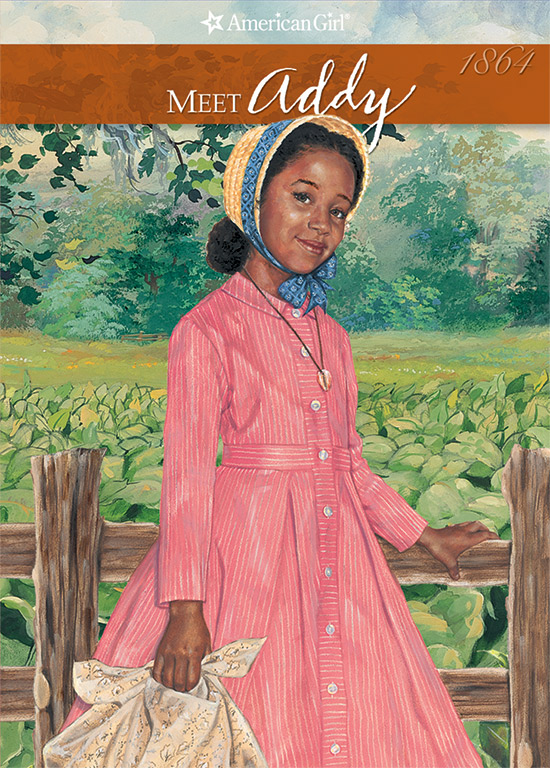
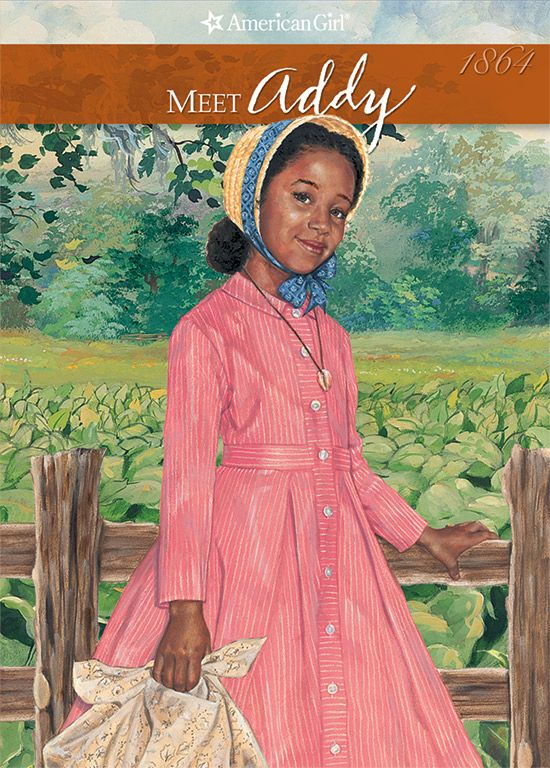
    Meet Addy

    Freedom’s got its cost

    Author: Connie Porter

    In my on going mission to reread all the American Girl “Meet” books, we have finally reached Addy.

    The Addy Controversy

    Addy was Pleasent Company’s first non-white character and I know some people object to Addy’s story being set in the civil war. Some argue that Pleasent Company couldn’t think of any other story to tell with a black girl. According to the American Girl Wiki, it was an intentional choice by the advisory committee to tackle the most painful part of American history head on. I don’t know if that is true, what I do know is Connie Porter wrote an amazing story!

    I still have a lot of American Girls to “Meet” and we are rapidly approaching the end of characters I remember from my childhood, but I remember being moved by Addy’s story in a way that the other girls just didn’t emotionally impact me.

    Addy’s Personally

    All the American Girls are introduced doing something timeless in a setting that grounds us in there time period. Kirsten is playing dolls, on the deck of the ship taking her to America. Felicity is running an errand for her mother. Addy is listening to her parents talking at night.

    We are told that Addy feels safe surrounded by her family, and this sence of safety gets ripped away.

    Addy is highly intelligent, and that leads to her ability to adapt to her surroundings.

    Throughout the book, Addy develops an internal locus of control, or as Papa puts it “freedom in your head.” This allows Addy to adapt a new sence of safety as the story progresses.

    Symbols in Addy’s story

    There are a lot of references to bugs in Addy’s story. Addy hears crickets at the beginning of the story. She is famously force-fed worms by the overseer on the plantation. Addy even pulls a leech off of her skin after crossing a river.

    In the last chapter, once Addy and Mama are safe, the references to bugs stop. I think the bugs are there as a visceral representation of slavery itself. It’s an age appropriate means of touching on the cruelty and violence inflicted on people in slavery. The series isn’t going to show Addy having the overseer’s “worm” forced down her throat, but it can and does show him forceing real worms down her throat.

    Addy Doll

    I have avoided talking about the dolls or tie-in merchandise because I want to focus on the stories, but I want to point it out with Addy because of how well written it is.

    All the American Girl dolls had a “Meet Accessories” bundle you could buy that included a hat, a bag, handkerchief, a piece of jewelry, and money from the time period. (Kirsten didn’t need money on the prairie so she got a spoon)

    Everything in Addy’s meet collection is used in this story. If you aren’t paying attention to the ONE refrance in the book to Felicity’s amber necklace you can be forgiven for not noticing it on the doll… or knowing it’s actually a coral necklace. But Addy’s shell necklace is a family heirloom that gives her courage, her coin is a symbol of the price she must pay for freedom. The handkerchief and water jug are the survival tools she and Mama use in their escape. I don’t think Kirsten’s spoon even gets a mention in the text!

    Addy is a according to the Straus-Howe Generational Theory, Addy is a member of the Progressive Generation (along with Kirsten’s baby sister and Samantha’s Grandmother.) This generation was defined by rebuilding America in the wake of the Civil War, and they adapted to the needs around them. We definitely see this adaptability with Addy.

    Future Theory

    I aways liked the idea that the American Girls all co-exist in the same universe. Like if Addy’s family had gone to Minnesota instead of Pennsylvania they might have met the Larsons. The woman who helped Mama and Addy get to Philadelphia is named Caroline, and assuming she’s about 60… let’s just remember Miss Caroline when we get to Meet Caroline.

    But that won’t be for a while, next up I am reading Meet Josefina.

  • Spoiler-Free Review: Doomsday Book

    Spoiler-Free Review: Doomsday Book

    “None of the things one frets about ever happen. Something one’s never thought of does.”

    Author: Connie Willis

    In a world with time travel, it would be only natural for it to be used to study history.

    When a young historian is sent into the Middle Ages, she thinks she was prepared for anything. The medical staff treating her made sure she was inoculated against all of the nasty plagues sweeping through England, but there is no inoculation for her heart. It’s one thing to read about abusive historical customs like child brides, it’s quite another thing to see the fear in the face of a little girl you have gotten to know as she meets her “intended” for the first time.

    The head historian fears sending someone to the 14th century due to the Black Death, but it’s back home at the college where a pandemic breaks out.

    Reading this book post 2020, was kind of chilling. Lockdowns, people ignoring the damage done to children, the rules not applying to certain people, I found myself double checking the copyright more than once. I assure you, it was originally published in 1993, and re-released in 2023. My copy was the re-released version so I don’t know if any details where updated after the 2020 pandemic, but the plot itself couldn’t have been.

    This is a very good, very sad book. I’ll tell you right now, this a story about a plague. A lot of characters die. It’s not a beach read.

    I do recommend this book, but I recommend you do some soul-searching and make sure you don’t have any COVID-19-related trauma before you read this book. I didn’t think I was traumatized by COVID-19 until the plague hit the college in this book prompting lockdowns that I found myself having to take a break. I didn’t realize that I had lingering trust issues around how public institutions handle public safety until I found myself upset at how the college handled the pandemic in this book.